Volunteers were called upon to become Gymnastic Instructors heralding the birth of the Royal Navy Physical Training Branch.
These recruits conducted their early training at Whale Island before a period with the British Army at Aldershot before being drafted to Ships and Establishments. The first instructors only taught activities that developed muscle and body control such as gymnastics, boxing and club swinging
Commander N. C. Palmer, the Superintendant of Gymnasia, studied the methods used by the military in Sweden and invited a Swedish professor, Mr Alan Broman to train classes of ratings at the RN Barracks, Portsmouth. The system was adapted and developed as the basis for physical training for the Service and became colloquially known as the 'Swedish System'
The first Physical Training Instructors Course was held in the Royal Navy Barracks, Portsmouth
It was approved that a separate establishment should be built on land acquired from the War Office. Completed at a cost of £15,000 the new School of Physical Training was opened on 22nd September 1910. The building was the Royal Navy Barracks Recreation ground which contained one of the best running tracks in the country at the time
Royal Navy School of PT at Pitt Street opened
After the First World War, it was decided that more PT Instructors were required to train both the continual flow of recruits and to maintain the fitness and morale of all Service personnel. Recreational Training was introduced alongside Fitness Training for mature officers and men
Formation of RN and RM Sports Control Board
Appointment of the first RN Sports Officer as Secretary of Athletic, Boxing, Fencing and Swimming
From Free Activity System to the development of Physical Fitness & Recreational Training
Saw the beginning of a major restructuring of Physical Training in the Royal Navy with the ending of the post of the 'Superintendent Royal Navy School of Physical Training' and replaced by the 'Director of Naval Physical Training and Sport' (DNPTS) at the MOD in London
RN School of PT Commissioned at HMS TEMERAIRE. Superintendent RNSPT becomes DNPTS and moved to MOD
Two Retired Officer billets created on DNPTS complement as Sports Officers
DNPTS organisation moved out of London to HMS NELSON to be closer to HMS TEMERAIRE
PTIs had been part of the Operations Branch as a Specialised Qualification (SQ) of their own. However, in 1975 the Admiralty Board decided that the two roles were no longer compatible and formed a new Branch, the Physical Training Branch
Royal Naval Physical Training Branch (RNPTBA) Association formed in 1975
The formation of the Women's Royal Naval Service (WRNS) PT Branch, LWPTQC 01
January - June 1978
End of an Era. Following another rationalisation study, DNPTS and Temeraire merged. A further seven years later, in 1988, the whole organisation moved from Pitt Street, which was now 80 years old, to its brand new, facilities at Burnaby Road
1st WRNS PT Officer in 1987
The new HMS TEMERAIRE opens its gates and the first course to pass out is LPTQC 26
The RN/RM Sports Lottery was a voluntary lottery set up to generate non-public funds to benefit all aspects of Sport, Adventurous Training and Challenging Activities within the Royal Navy
With the formation of the Warfare Branch in 1995 from the amalgamation of the core Operations Branch and the smaller support Branches that surrounded it, the identity of the PT Branch was lost and it once more became a Specialisation
Compulsory fitness testing was introduced and the Royal Naval Fitness Test (RNFT) is now taken annually by everyone under the age of 55 years. This initiative made it abundantly clear that the Physical Training Branch is a crucial contributor to the fighting efficiency of the Fleet
The trinity of PDEV (Adventurous Training, Physical Education & Sport) is agreed, its purpose is to enable personnel to withstand the physical rigours of Service life and imbue them with a winning war-fighting spirit.
Introductory Military Fitness (IMF) or Swedish PT as it was colloquially known is re-introduced to Phase 1 Training at HMS RALEIGH & BRNC.
Second Sea Lord tasks the PT Specialisation to stand up an annual Strength Test and Functional Training/Strength & Conditioning exercise programme to make Sailors more effective and efficient.
DNPD changes to Captain Naval Physical Development (CNPD) and later becomes Personal, Family, Community Support & Physical Development
The first TEMERAIRE was captured from the French by Boscawen in 1759, and later saw action with the Navy at Belle Isle in 1761 and at Havannah and Martinique in 1762. These were just the first in a long series of Battle honours associated with the name TEMERAIRE.
The second TEMERAIRE is undoubtedly the most famous. Under the command of Captain Eliab Harvey at the Battle of Trafalgar in 1805 she famously came to the rescue of Admiral Lord Nelson and his ship VICTORY by attacking the French flagship REDOUBTABLE as her sailors prepared to board the VICTORY. After the battle a badly damaged TEMERAIRE managed to reach San Lucar from where she was towed to Gibraltar and, after a mini refit, she returned under her own sail to Spithead and a hero’s welcome. The skills and values used by Harvey to complete this daring feat: leadership, courage and judgement, are still encouraged and nurtured in the present day TEMERAIRE.
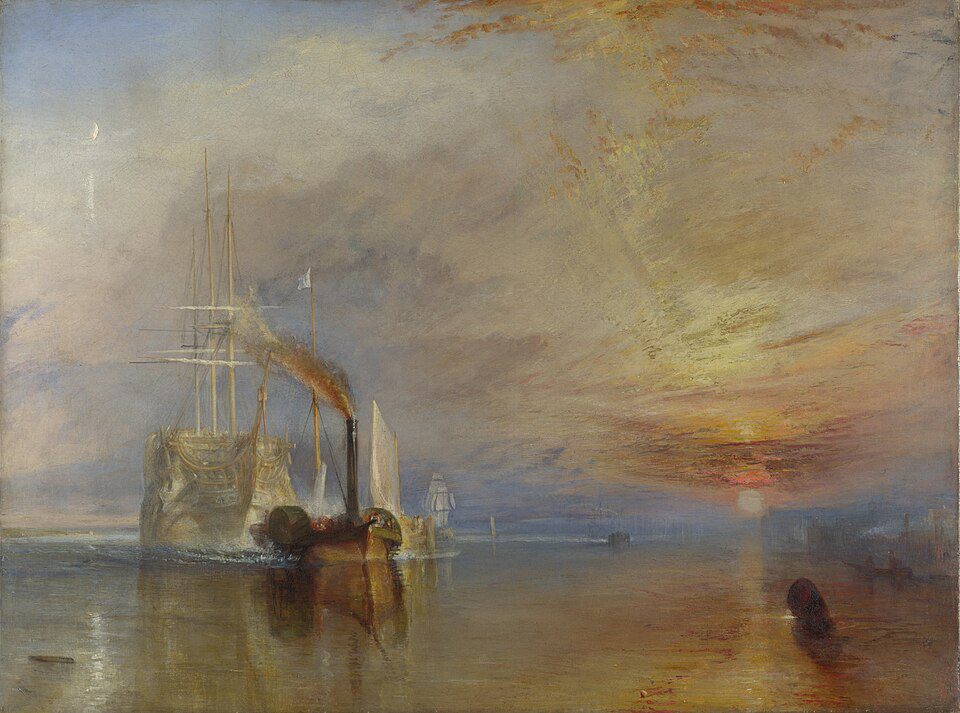
Perhaps the most famous image of this TEMERAIRE is that captured by the artist Turner as the Trafalgar veteran was being towed to be broken up at Deptford in 1838. The title of the picture, ‘The Fighting Temeraire’, is a piece of both naval and art history.
The “Fighting” name next passed to a battleship in 1876. She also saw action, and gained battle honours, firstly during the passage of the Dardanelles in 1878 and later for her involvement in the bombardment of Alexandria in 1882.